

Safe medication handling is a critical responsibility when supporting clients, particularly seniors and individuals with chronic conditions. In British Columbia, support workers must follow established medication-assistance standards to reduce errors, protect client safety, and remain within scope of practice (HealthLink BC, 2023; ISMP Canada, 2022).
Handling Blister Packs Correctly

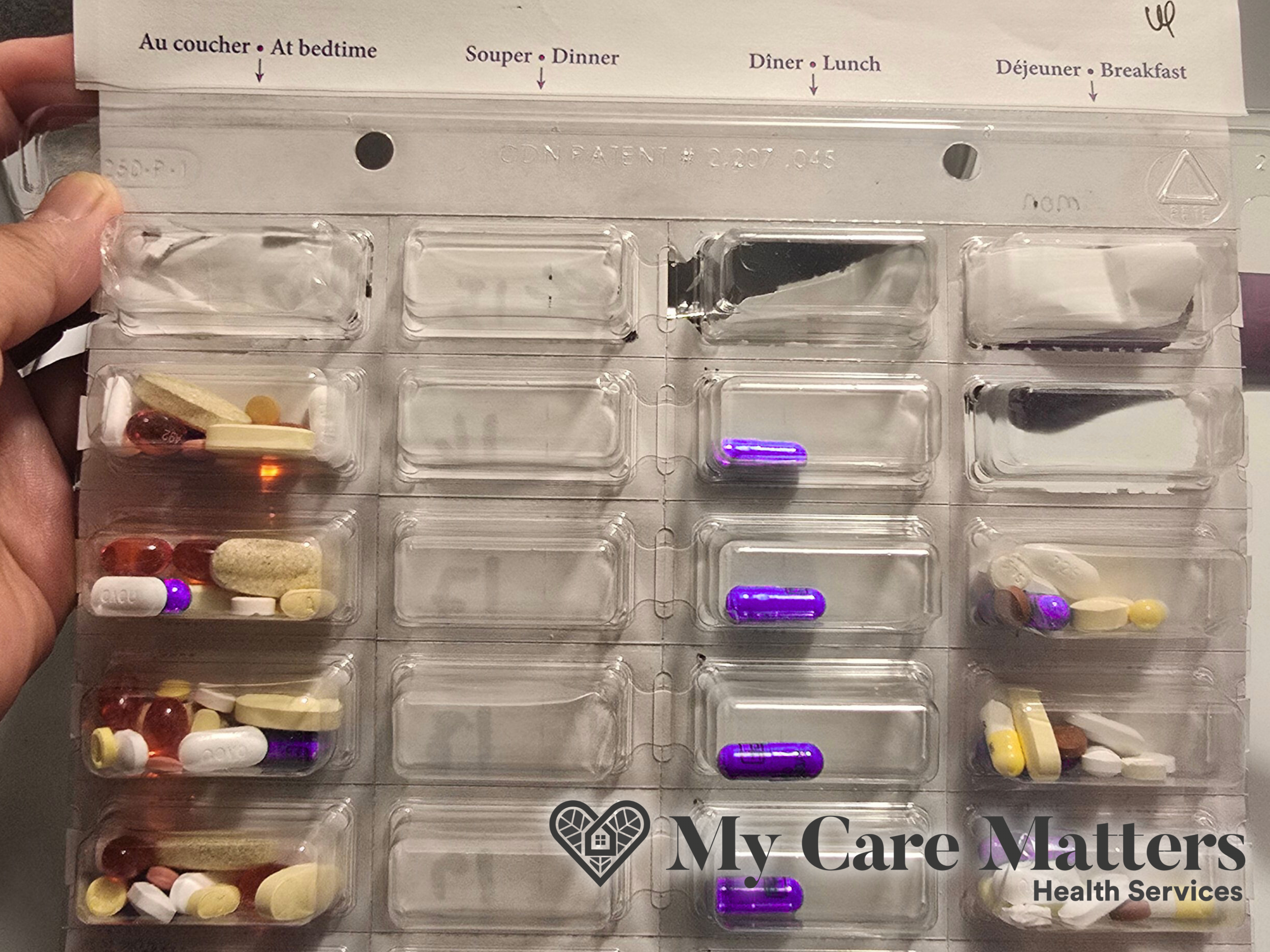
Blister packs are prepared by licensed pharmacies to organize medications by date and time, helping prevent missed or double doses. Support workers must never alter, remove, split, or reorganize blister packs unless directed by a regulated healthcare professional. Before assisting, verify the client’s name, medication schedule, and correct time slot. If a blister pack is damaged, unclear, or missing medication, the dose must not be administered and should be reported immediately (ISMP Canada, 2022).
Staying Within Scope of Practice

Support workers may assist with reminders and observe self-administration, but they must not make clinical decisions, adjust dosages, or provide medical advice. If a client refuses medication or appears unwell, the worker should remain calm, document the refusal, and notify the care coordinator or supervising nurse. Clients always have the right to refuse medication (College of Pharmacists of British Columbia, 2021).
Applying the “Five Rights” of Medication Safety
Even when medications are pre-packaged, support workers must verify the right client, right medication, right dose, right time, and right route every time assistance is provided. This practice is widely recognized as a foundational medication safety standard in community care (HealthLink BC, 2023).
Proper Storage and Hygiene

Medications must be stored in a cool, dry, secure location, away from heat, moisture, and direct sunlight. Bathrooms are not recommended due to humidity. Support workers must wash their hands before assisting and avoid touching pills directly whenever possible to reduce contamination risk (National Institute on Aging, 2023).
Documentation and Reporting

Accurate documentation is essential for continuity of care. Support workers must record medication assistance, refusals, missed doses, or observed side effects in the care log. Any concerns—such as expired medications, changes in blister packaging, or adverse reactions—must be promptly reported to the office or supervising nurse (ISMP Canada, 2022).
How My Care Matters Supports Medication Safety
At My Care Matters, we support safe medication management through structured care plans, clear scope guidelines, and collaboration with pharmacies and healthcare professionals across Vancouver and the Lower Mainland. Our support workers help clients maintain consistent routines while prioritizing safety, dignity, and independence.
Conclusion
Medication management is a shared responsibility that requires accuracy, consistency, and clear communication. By handling blister packs correctly, staying within scope of practice, following medication safety principles, and documenting concerns promptly, support workers play a vital role in protecting client health and well-being.
References
College of Pharmacists of British Columbia. (2021). Medication adherence packaging and patient safety. https://www.bcpharmacists.org
HealthLink BC. (2023). Medication safety for older adults. Government of British Columbia. https://www.healthlinkbc.ca/healthwise/medication-safety-older-adults
Institute for Safe Medication Practices Canada. (2022). Medication safety in community and home care settings. https://www.ismp-canada.org
National Institute on Aging. (2023). Safe use of medicines for older adults. https://www.nia.nih.gov/health/safe-use-medicines-older-adults